Fixings are the small parts – such as brackets, bolts, anchors, and supports – that hold a riser system in place.
Although they may seem unimportant, the correct fixings help ensure that:
- The riser is installed securely and accurately.
- It can safely carry the weight of pipes, cables, and equipment.
- It meets fire-safety requirements.
- It fits the type of wall, floor, or structure.
- It is easier to inspect, repair, or replace later.
In simple terms, choosing the right fixings early helps make the riser safer, easier to install, and more reliable over time. For that reason, choosing fixings is a technical decision as well as a coordination decision.
Why Fixings Matter in Riser Design
Fixings are the parts used to attach channels, brackets, beams, supports, pipes, and other services to the building. Using the wrong fixings can cause problems such as movement, uneven installation alignment, damage to the building material, or extra repair work.
Risers are often installed in small, tight spaces. As a result, the fixings may need to connect to concrete, steel, or fire-rated boards. Each material needs a different type of fixing, so one fixing method will not work everywhere.
Choosing the correct fixing makes installation quicker and reduces mistakes. It also helps keep the installation the same on every floor, which is especially important in tall buildings where the riser layout is repeated many times.
Main Fixing Methods
There is no single type of fixing that works for every riser. The correct choice depends on the building structure and how much weight the fixing needs to support.
The three common types are mechanical fixings, cast-in fixings, and bracket systems.
- Mechanical fixings are installed after the concrete or structure has been completed. They are useful when the installer needs to make adjustments on site. However, the fixing must be suitable for the material it is attached to and must be installed correctly.
- Cast-in fixings are placed inside the concrete before it is poured, and they create strong and consistent fixing points. They are useful when the riser design is agreed upon early because they reduce the need to drill into the concrete later.
- Bracket systems provide planned support points for pipes, cables, and other services. They help keep everything in the correct position and safely transfer the weight to the building structure. Because the support locations are already decided, installation can be quicker and more consistent.
Matching Material to the Application
The fixing material should suit the environment in which it will be used. Galvanised steel, stainless steel, and GRP each have distinct properties and can be appropriate in different situations.
Galvanised Steel
It is commonly used where standard structural support is needed, and corrosion risk is moderate. It is widely available and familiar to installers. In projects with more demanding conditions, however, another material may be more suitable.
Stainless Steel
It is often selected where the risk of corrosion is higher, meaning that it can be particularly useful in exposed areas, humid conditions, or locations where long-term durability is a priority. Stainless steel can support a longer service life in the right environment.
GRP
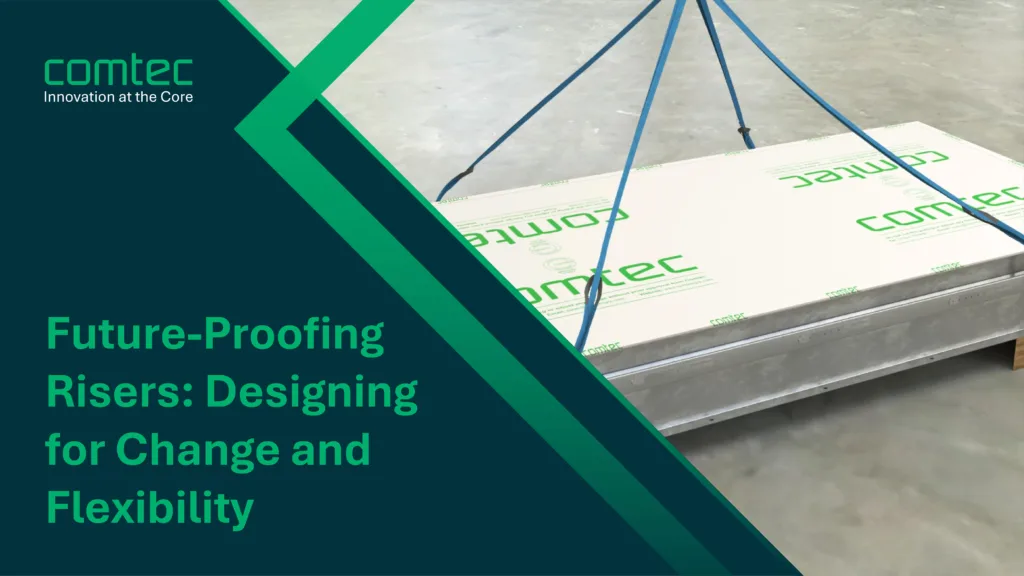
Comtec’s AlphaRiser systems are designed with GRP as part of the solution, which can be useful where a lightweight and corrosion-resistant option is needed. For fire-rated applications and fixed points within the system, Comtec also offers products such as WallBeam, which support compliant fixing without compromising fire performance.
In projects where the riser needs to integrate with the wider building structure, these products can help the team choose a support approach that fits the project’s specific conditions.
The choice is not just about the material itself; it is also about how the material behaves in the complete system. Load, access, fire performance, and durability all need to be considered together.
Fire and Compliance Considerations
Risers often pass through walls and floors that are designed to stop fire from spreading. The fixings used in these areas must not damage or weaken that fire protection.
For example, drilling into a fire-rated wall without using the correct method could reduce its ability to resist fire. Even if the fixing is strong enough to hold the services, it may still be unsafe if it affects the wall’s fire performance.
Fixings should therefore follow approved drawings, tested systems, and the manufacturer’s instructions. They must also be suitable for the weight, the installation method, and the materials being used.
A purpose-designed and tested fixing should always be used instead of choosing a quicker or easier solution on site.
Coordination during Design
Fixings are easiest to manage when they are coordinated early. This means that the structural engineer, the MEP engineer, and the riser system supplier should all understand where supports will go and what loads they need to carry. If this happens late, the team may have to adapt on site, which can affect time and cost.
Coordination is especially important where multiple MEP services share the same riser. Pipes, ducts, cable routes, and access needs all compete for space. The fixing arrangement should support a mixed-service layout without clashes or limiting future access.
Using BIM can help identify these issues before construction begins. It allows the team to see how the fixings interact with the structure and the surrounding services. This makes it easier to keep the riser clear and organised, and to build it.
Practical Approach to Selection
A sensible approach is to start with the structure, then move to load, environment, and fire requirements. From there, the team can narrow down the repair method and materials that fit the project. The final choice should be based on the system as a whole, not just the component itself.
A simple checklist can help:
What is the substrate: concrete, steel, or fire-rated board?
What load must the fixing carry?
Is corrosion resistance important?
Does the fixing affect fire integrity?
Is the detail tested or approved for this use?
Can it be installed and maintained easily?
These questions help reduce uncertainty and keep the decision grounded in project needs.
Fixings may be a small part of the riser, but they affect how the system is built, supported, and maintained. Choosing the right method and material means looking at the substrate, load, access, and compliance requirements together.
Comtec’s riser and fixing solutions are designed to support that process by giving project teams options for different conditions, from GRP-based riser systems to fire-rated fixing points. When the fixing strategy is considered early, it is easier to deliver a riser system that is coordinated, practical, and suited to long-term use.